2000-ongoing Great Bear Lake Fisheries
The road to ecosystem redemption: Comparative study of degraded and pristine giant lakes of North America using Ecopath
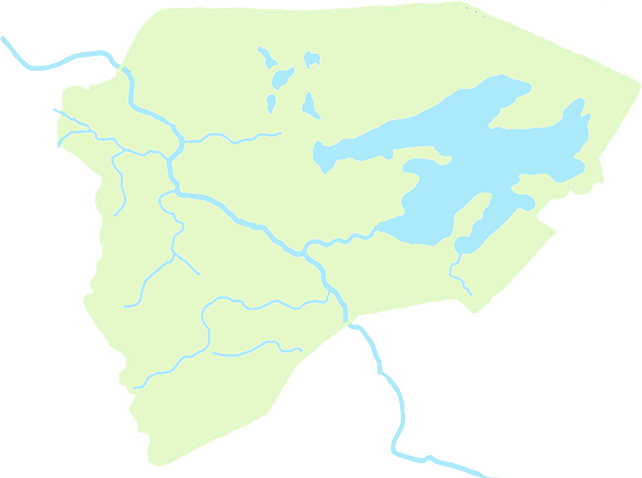
This project is focused on comparison of ecosystem health of pristine and degraded giant lakes of Canada and was partially funded by Aboriginal Affairs and Northern Development under NWT Cumulative Impact Monitoring Program (CIMP). Ecosystem health is comparatively a new approach in environmental management and refers to the condition and functioning of an ecosystem in comparison to the normal conditions and functions. The project also supports one of the objectives in the “Waterheart” Great Bear Lake Management Plan to develop an ecosystem model of the lake. This research is developing simple and robust ecosystem models that managers can use to explore the whole system management strategies for fisheries and to determine the risk of degradation of ecosystem health. The project also incorporates the traditional knowledge to deepen the understanding of cumulative impacts caused by the present and foreseeable future fishing and other anthropogenic activities and climate change. Under this project, a workshop was held in 2012 at Déline and traditional knowledge regarding temporal change in fish community, subsistence fisheries, climate change and community approach towards a healthy ecosystem was gathered through interviews and discussions during the workshop under proper partnership with the community. As hypothesized, the pristine GBL ecosystem looks more developed, stable and in better health as compared to few other great lakes of Canada.
Lake Trout in the Great Bear Lake
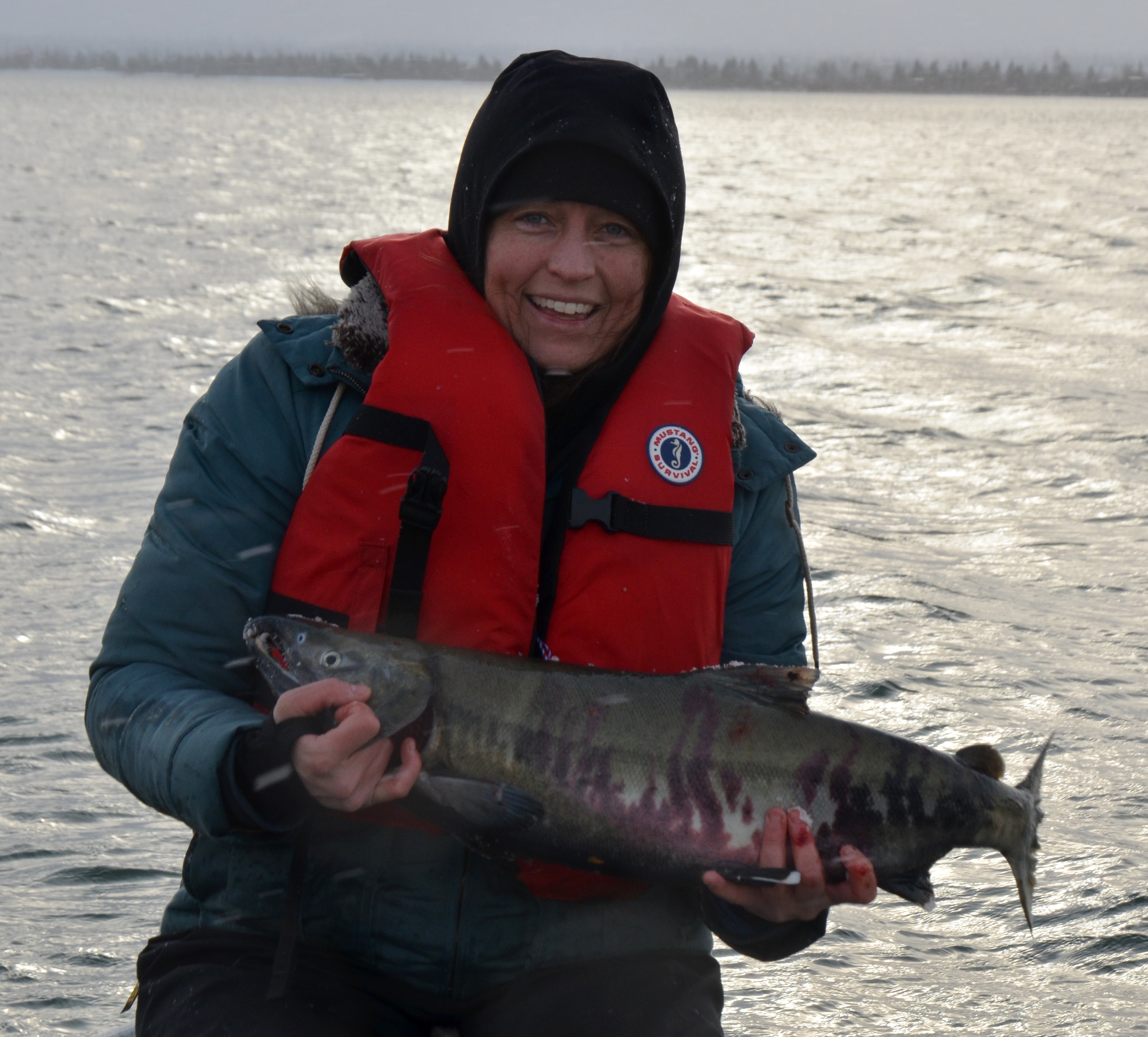
Dr. Kimberly Howland and her research group has been conducting research on lake trout in Great Bear Lake on an annual basis since 2000. The emphasis has been on sampling lake trout among the different arms of the lake to better understand their size and age structure, growth, maturity and relative abundance for the purpose of assessing the status of harvested stocks. An additional component of the lake trout project has involved examining the presence of different forms of lake trout present in the lake and how they contribute to the biodiversity and functioning of the Great Bear Lake aquatic ecosystem. This is being accomplished through ongoing research that includes measuring different attributes of the shape of the trout from pictures taken in the field, gathering Traditional Ecological Knowledge of lake trout types through interviews with Délı̨nę community members, examining the diet and looking at the chemical properties of muscle tissue that provide us with an idea on long-term feeding habits, and looking at movements through archival tagging.
The lake trout project was expanded in 2008 to include more comprehensive annual sampling for cisco in different depths. Similar to the trout, the body shape of the cisco captured from shallow and deep habitats is being examined to determine if there are different forms of cisco as seen in many other deep north American lakes left behind after the last glaciation. The data collected so far has yielded a valuable time-series of information on the biology of lake trout in the lake and has confirmed the presence of multiple forms of lake trout and cisco that appear to have different ecological characteristics and roles in the Great Bear Lake food web.
Although research on these key fish species is important, we recognize that they do not live in isolation, but are part of a larger ecosystem. We have begun to build on this species-specific research by expanding the scope of our research for the lake. In 2012 we initiated a multi-year ecosystem study which maintains the lake trout and cisco assessment research, but has greater spatial coverage of different habitats, and includes the whole fish community together with water quality, primary productivity and invertebrate production which are essential for supporting fish populations. This expansion of the research will improve our understanding of the lake and how fish productivity is maintained. The large lake monitoring protocols we have developed and the baseline data collected through this study will form an important basis for tracking and understanding the cumulative effects of climate change, fishing and other anthropogenic (human induced) drivers on the Great Bear Lake ecosystem and its fisheries.
TheDélı̨nę Renewable Resources Council has been instrumental in coordinating hiring of technicians, renting of suitable boats for conducting the research, selection of suitable base camp locations, helping with logistics for remote camps, the collection of samples from community based monitoring sites, and dissemination of information about the research.
Team Members
- Kimberly Howland, DFO
- Délı̨nę Renewable Resources Council (DRRC)
- Délı̨nę Lands and Finance Corporation
- Natural Resources Délı̨nę
- Field technicians who have participated in the project over the years (Jane Baptiste, Doug Baton, Isodore Betsidea, John Betsidea, Morris Betsidea, Moise Beyonnie, Gloria Gaudette, Bruce Kenny, Darren Kenny, Greg Kenny, Hughie Kenny, Jonas Kenny, Morris Lennie, George Menacho, Bobby Modeste, Morris Modeste, Nathan Modeste, Isreal Neyelle, Lyle Neyelle, Clyde Takazo, Lucy Ann Takazo, Allison Tatti, Gerald Tutcho, Archie Vital, Freddie Vital, Cameron Yukon, Cyre Yukon, Tyrone Yukon, Charity Yukon, Barbara Yukon, Chris Yukon)
Funders
Sahtú Renewable Resources Board, the Polar Continental Shelf Program, the NWT Cumulative Impacts monitoring Program, Canadian Circumpolar Institute, Natural Sciences and Engineering Research Council and Fisheries and Oceans Canada.
Total Budget
$25,000











 Phone: 867-374-4040
 Email: