Ɂehdzo Got’ı̨nę Gots’ę́ Nákedı
Sahtú Renewable Resources Board

2014-2015 Elders Gathering

The purpose of this gathering was to engage in dialogue with elders about wildlife management, research and monitoring.

Team Members

Jeff Walker, ENR

Michael Neyelle, Ɂehdzo Got’ı̨nę Gots’ę́ Nákedı

Funder

Environment and Natural Resources, GNWT

Total Budget

$ 5,830

2013-ongoing Sahtú Mercury Research Synthesis

The long-range atmospheric transport of mercury and subsequent deposition in Arctic environments is an ongoing global concern. In November 2013, after years of negotiations, a legally binding international treaty, the Minamata Accord, to reduce harmful emissions of mercury was signed by more than 140 nations.

In the NWT, and in particular in the Sahtú Region, community concern about the potential negative impacts of mercury contamination in fish, public health advisories for local lakes (e.g., Kelly Lake), and associated human health risks remains a priority. As a result, the proposed research will help Sahtú communities to better understand the relevance and findings of mercury studies that have been undertaken. The need for a compilation, analysis and synthesis of research on mercury in the Sahtú, and reporting back to front-line workers and community representatives, became apparent at the Tulı́t’a Research Results Workshop in November 2013, when numerous concerns were raised.

The proposed project will accomplish the following: 1) desktop review and synthesis of mercury research data for the Sahtú region, 2) compare research findings with guidelines and advisories to determine where concerns may exist, and 3) summarise findings of Sahtú mercury research and identify any gaps (research and communications).

Working through the ɁehdzoGot’ı̨nę Gots’ę́ Nákedı and the Sahtú Environmental Research and Monitoring Working Group, the proposed research project will emphasize the synthesis of existing data for the priority contaminant mercury. The work will be a desktop study, with guidance and feedback provided by the Sahtú Environmental Research and Monitoring Working Group. Work will be carried out between July and October 2014, with reporting and a community summary of findings to be prepared by mid-December 2014.

Funders

Northern Contaminants Program, AANDC

Funding 

$15,000

2014-2016 Monitoring Framework

This project will involve literature review and collaborative research with RRCs and industry. The Guidelines will be developed to complement existing BEAHR  (Building Environmental Aboriginal Human Resources) Occupational Standards and course curriculum for training monitors, as well as the NWT Experiential Science curriculum for high schools, and the NWT Cumulative Impact Monitoring Program’s Pathways guide for community-based research. The intended audience will be RRCs and community members, high school students, adult education students, as well as industry and researchers. This project is prioritized for timely completion so that it can be applied in the context of monitoring for the 2014-2015 winter exploration season in the shale oil play.

The Framework will be structured as a plain language strategic planning document. The structure of the document will be adapted based on inputs from various stakeholders, but may include sections on the following topics:

  • What is environmental monitoring?
  • Why is environmental monitoring important in the Sahtú Region?
  • What are the priority questions that monitoring can address?
  • How can monitoring make a difference in decision-making?
  • How do harvesters monitor the land, water, and wildlife?
  • How do scientists monitor the land, water, and wildlife?
  • What skills and knowledge are needed to do monitoring that addresses priority questions?
  • What are the obstacles to getting the skilled community monitors that we need in the Sahtú Region?
  • What can be done to build a team of professional monitors?
  • How can the team be supported over the long term?

Team Members

  • Shelagh Montgomery
  • Deborah Simmons, Ɂehdzo Got’ı̨nę Gots’ę́ Nákedı
  • Joe Hanlon, Ɂehdzo Got’ı̨nę Gots’ę́ Nákedı

Funders

Wildlife Fund - Ɂehdzo Got’ı̨nę Gots’ę́ Nákedı, AANDC (Aboriginal Affairs and Nothern Development Canada)

Total Budget

$71,632

2014-2021 Winter Track Surveys

Communities, government and industry have all expressed interest in monitoring the cumulative impacts of oil and gas exploration activity and other natural factors on wildlife within the Sahtú region. The Cumulative Impacts Monitoring Program (CIMP) has provided funding to start a collaborative wildlife monitoring program entitled "Multi-species monitoring using winter wildlife track surveys in the Sahtú Settlement Region" that uses surveys of wildlife tracks in the snow to measure changes in abundance and distribution of species such as boreal woodland caribou, moose, wolves and other furbearers such as marten and lynx. Further funding was secured from the NWT Environmental Studies Research Fund to continue the program from 2017-2021. The territorial government, Sahtú Renewable Resources Board (Ɂehdzo Got'ı̨nę Gots'ę́ Nákedı), and Tulı́t’a and Norman Wells Renewable Resource Councils (Tulı́t'a Ɂehdzo Got'ı̨nę and Tłegǫ́hłı Renewable Resources Council) have been partners on this project.  Explor also provided track survey data collected during their Tulita seismic survey program in 2012 and 2013.  Track surveys are conducted by teams of youth and elders along trails and seismic lines around each community.  A mobile data collection app (Trailmark) is used to record tracks on handheld computers using a series of standard questions, along with coordinates, photos and audio recordings associated with each track. 

WinterTrackMonitoring

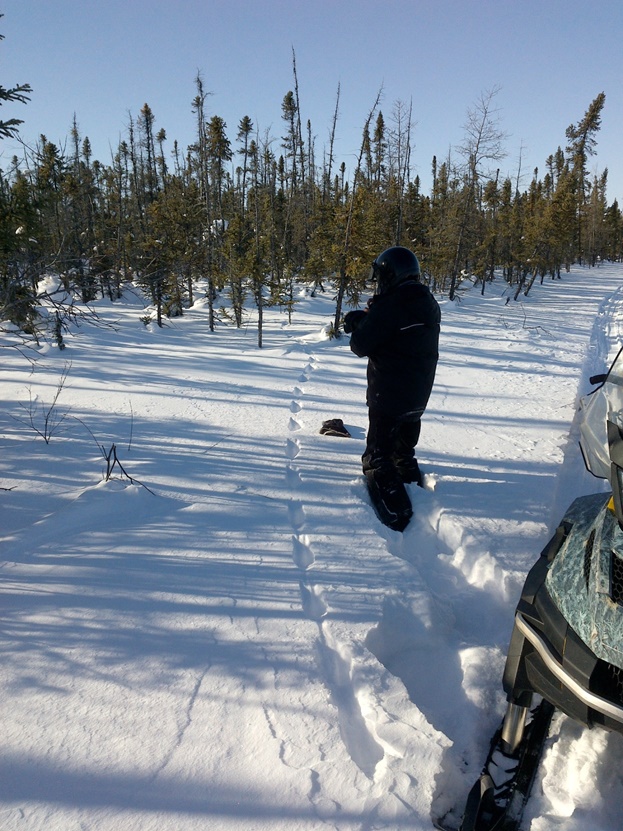
Photo: William Horassi recording a Mink track along the trail to Willow Lake (Credit: GNWT-ENR)

This project will provide maps of where wildlife tracks are seen on the land, and information describing the habitat at each track observation. By repeating the surveys along the same trails and seismic lines over many years we will measure whether wildlife abundance and distribution is changing and if there is a link to the amount of industrial activity, forest fires and other human activity in different areas. This will help wildlife and land managers to understand the combined impacts of industrial development and natural disturbances and help to guide decisions about land use and wildlife harvesting.

Team Members

Funders

Reports

NWT Environmental Research Bulletin:

http://sdw.enr.gov.nt.ca/nwtdp_upload/128-CIMP_Bulletin_v3i15_press.pdf

Final Project report for CIMP:

 http://sdw.enr.gov.nt.ca/nwtdp_upload/2016-17%20FINAL%20REPORT%20-%20CIMP162%20(Hodson)%20-%20Sahtú%20Snow%20Track%20Monitoring_26May2017%20(3).docx

2017-2018 ESRF Annual Report                                                                                                       

https://www.nwt-esrf.org/sites/default/files/2018-08/2017%202018%20ESRF%20Annual%20Report.pdf

Other reports and presentations:

Search for “CIMP162” on the NWT Discovery Portal http://nwtdiscoveryportal.enr.gov.nt.ca/geoportal/catalog/main/home.page

Total Budget

~$75,000 / yr


1995-ongoing Willow Lake Duck Banding

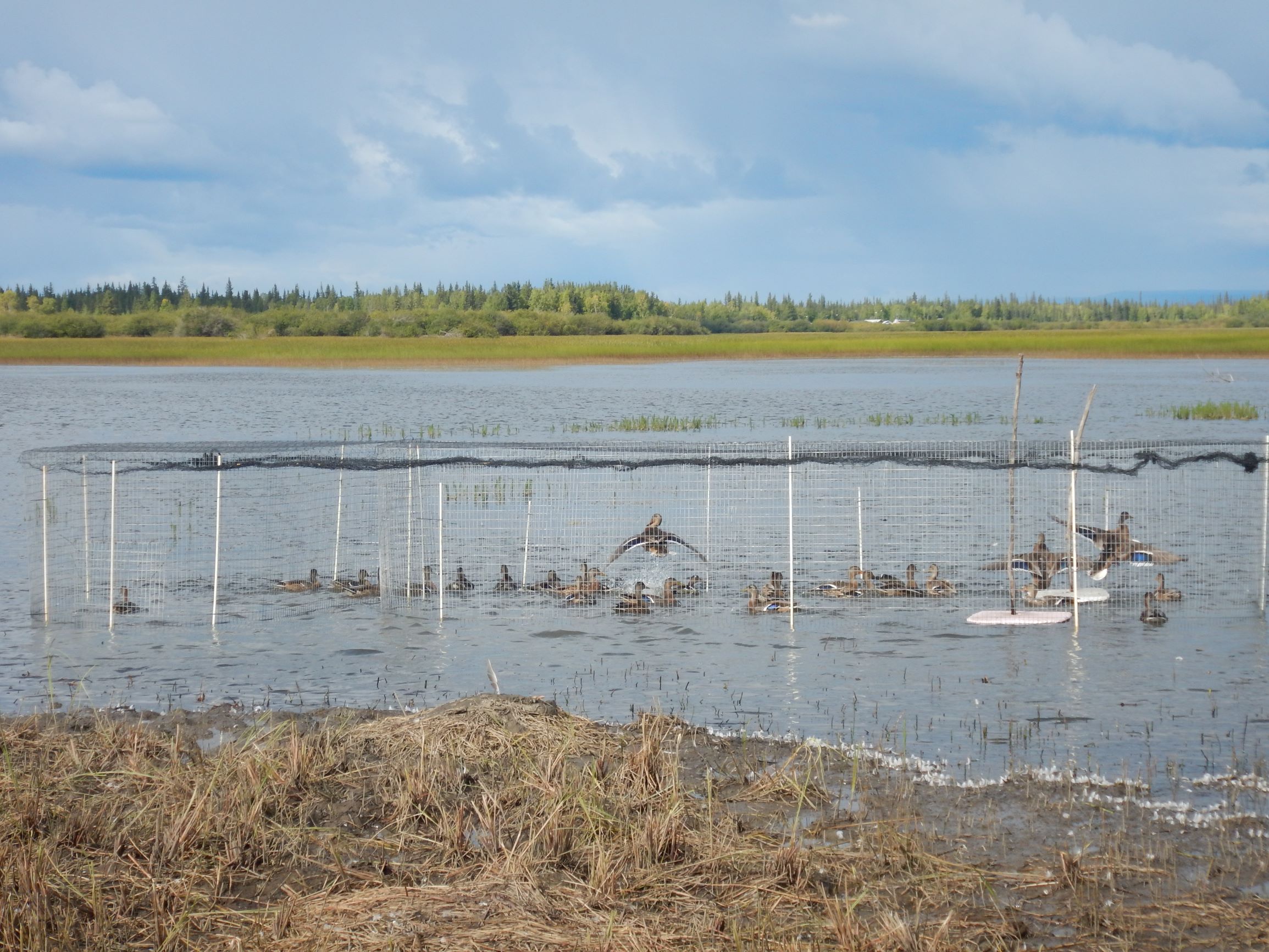
Since 1995, the United States Fish and Wildlife Service (USFWS) has collaborated with the Tulita Renewable Resources Council (TRRC) and the Government of the Northwest Territories’ Department of Environment and Natural Resources (ENR) and more recently with the Sahtu Renewable Resources Board (SRRB) to band ducks within the Sahtu. The project was initially established at Loche Lake and Loche River northeast of Tulita in 1995 however, based on local traditional knowledge, in 1996 the banding station was moved to the nearby and larger Willow Lake where it has since remained. The station is operated by a waterfowl biologist from the USFWS, and two banding assistants hired from the Tulita Community.
Picture 2

The annual goal of the project is to band 2,000 mallards, 1,500 northern pintail, and all incidentally captured ducks (up to 1,000 per species) from 01 August – 01 September, which is the opening day of the duck-hunting season in the NWT and other Provinces.  

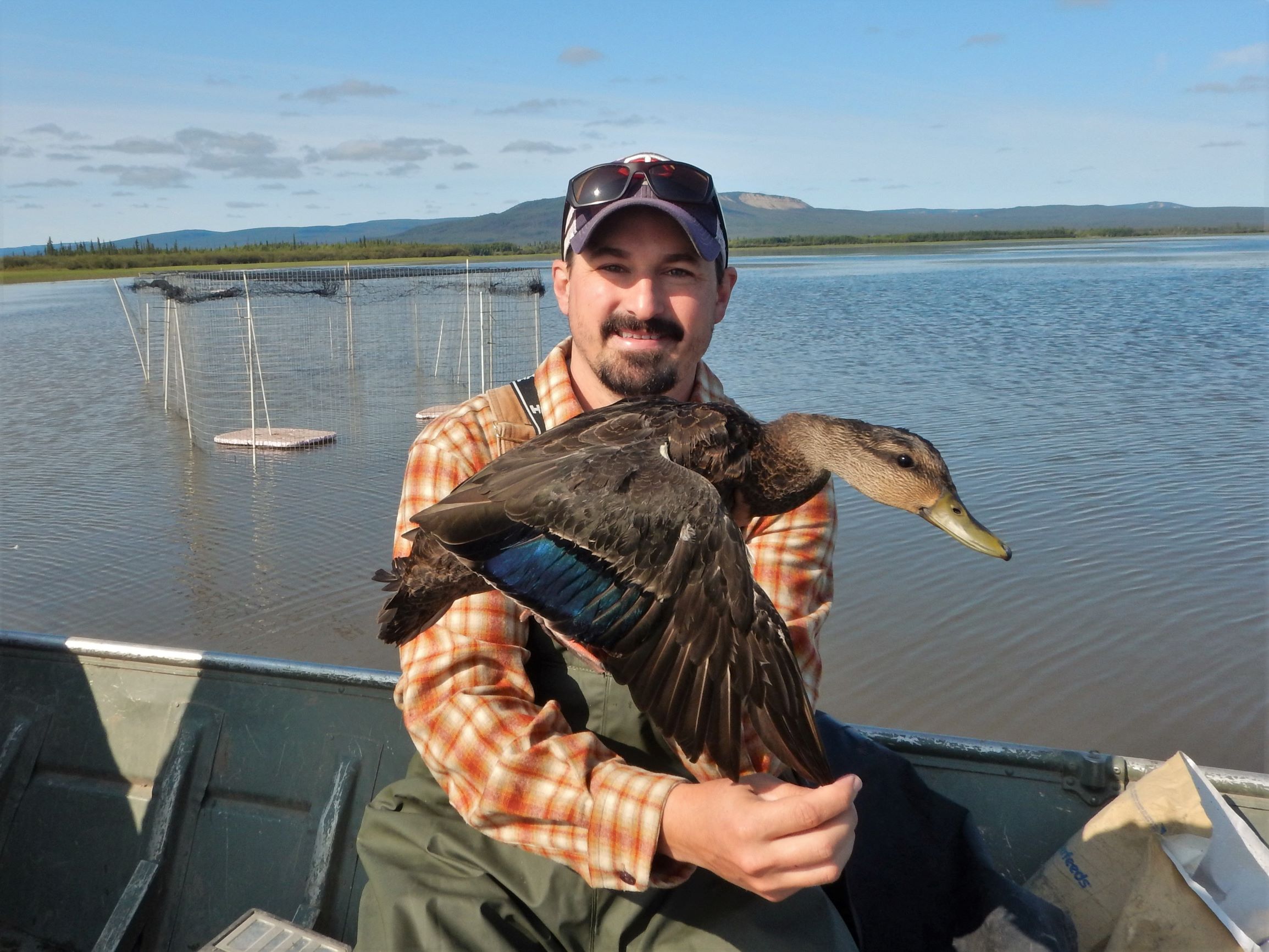
It is critical that banded birds be reported.  You not only help continue this project and others like it, but the USFWS gains the data they need to monitor the health of duck and goose populations and set annual hunting regulations in the US and Canada.  Since inception the project has banded over 30,000 ducks at Willow Lake.
Picture 6

Please report band numbers to the National Bird Banding Laboratory in the US or Bird Banding Office in Canada (by calling 1-800-327-BAND, or on the web at: www.reportband.gov).  

If you’re having trouble with the phone or website, you can also contact Team Member (below), Steve Olson, and he will report the band for you.

Team Members

Funder

Wildlife Fund - Ɂehdzo Got’ı̨nę Gots’ę́ Nákedı

Reports

  pdf Willow Lake Banding Report, 1995-2009(18.57 MB)

  pdf Willow Lake Banding Report, 2011(588 KB)

  pdf Willow Lake Banding Report, 2013(395 KB)

  pdf Willow Lake Banding Report, 2014(416 KB)

  pdf Willow Lake Banding Report, 2015(3.74 MB)

  pdf Willow Lake Banding Report, 2016(2.95 MB)

  pdf Willow Lake Banding Report, 2017(3.26 MB)

  pdf Willow Lake Banding Report, 2018(1.34 MB)

  pdf Willow Lake Banding Report, 2019(4.05 MB)

Total Budget

$8,800